


Delhi World Public School, Greater Noida
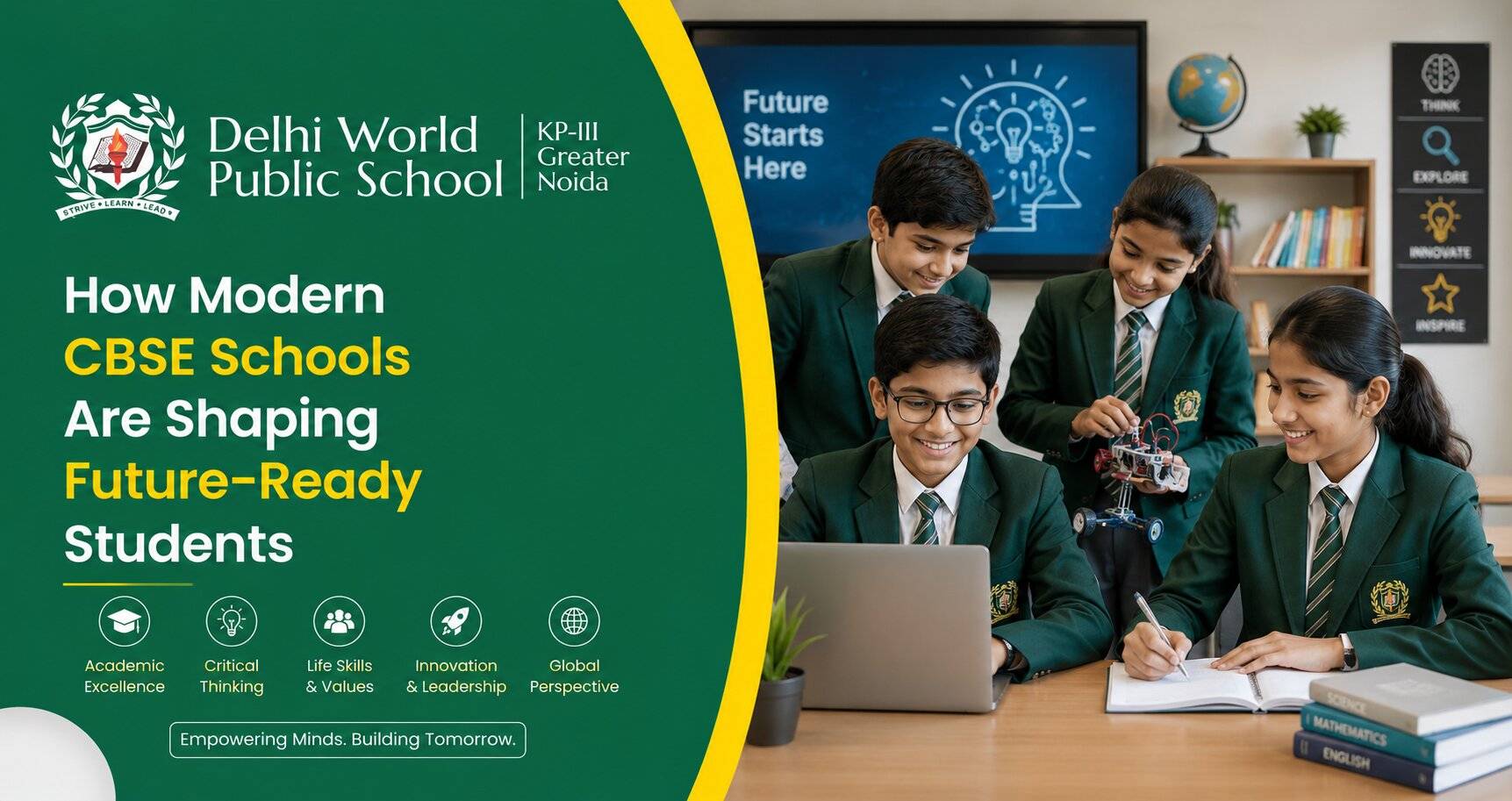
Education today is no longer limited to textbooks, examinations, and classroom lectures. At DWPS, the Best School in Greater Noida where the rapidly evolving global landscape demands individuals who can adapt, innovate, collaborate, and solve complex problems. As industries embrace digital transformation and emerging technologies, students must develop competencies that go far beyond academic excellence. Modern CBSE institutions are responding to these changes by creating learning environments that nurture curiosity, creativity, leadership, and resilience.
At Delhi World Public School, learning extends beyond classrooms to nurture confident, responsible, and future-ready learners. The institution emphasizes academic excellence, technology-enabled education, sports, performing arts, leadership development, and community engagement. Students actively participate in cultural events, science exhibitions, sports competitions, innovation programs, and co-curricular activities that encourage holistic growth. With a strong focus on values, creativity, and skill development, the school creates an environment where learners are empowered to excel academically while building the confidence and capabilities needed for lifelong success.
Traditional education primarily focused on memorization and examination performance. However, modern educational institutions recognize that future success depends on a broader skill set.
Today's classrooms emphasize:
Students are encouraged to ask questions, conduct research, and explore real-world solutions rather than simply learning facts for examinations.
Benefits of Modern Learning Approaches
|
Traditional Learning |
Modern Learning |
|
Memorization-focused |
Concept-focused |
|
Teacher-centered |
Student-centered |
|
Exam-driven |
Skill-driven |
|
Limited collaboration |
Team-based learning |
|
Fixed curriculum delivery |
Interactive exploration |
These approaches help students develop analytical thinking, creativity, and adaptability—skills highly valued in higher education and professional environments.
Technology has become an integral part of modern education. Digital tools enable personalized learning experiences that cater to diverse student needs and learning styles.
Interactive classrooms now utilize:
Technology helps students understand complex concepts through visual demonstrations and hands-on digital experiences.
Furthermore, digital literacy has become a fundamental life skill. Students learn how to evaluate information critically, collaborate online responsibly, and leverage technology for innovation and productivity.
Academic knowledge alone is no longer sufficient for long-term success. Modern educational institutions increasingly focus on life skills that support personal growth and professional readiness.
These skills help students navigate challenges effectively and build confidence in various situations.
|
Skill Category |
Importance Level |
|
Critical Thinking |
Very High |
|
Communication |
Very High |
|
Creativity |
High |
|
Collaboration |
High |
|
Digital Literacy |
Very High |
|
Leadership |
High |
|
Adaptability |
Very High |
The development of these competencies ensures that students are prepared not only for examinations but also for lifelong success.
Can leadership be taught solely through classroom instruction? The answer is no.
Extracurricular activities play a significant role in shaping well-rounded personalities. Participation in sports, performing arts, clubs, and community service initiatives allows students to discover their strengths and build confidence.
Activities such as debates, science exhibitions, sports tournaments, cultural festivals, and student councils provide valuable opportunities for practical learning and personal growth.
With countless career opportunities emerging across industries, students often require structured guidance to make informed decisions.
Modern CBSE institutions are increasingly investing in comprehensive career counseling programs that help students:
Career awareness programs, industry interactions, mentorship sessions, and aptitude assessments help students align their educational journey with long-term aspirations.
By exposing learners to diverse opportunities early, schools empower them to make confident and informed choices about their future.
|
Development Area |
Student Outcome |
|
Academic Excellence |
Strong conceptual foundation |
|
Technology Integration |
Digital proficiency |
|
Leadership Programs |
Decision-making ability |
|
Sports & Wellness |
Physical and emotional health |
|
Arts & Creativity |
Innovation and expression |
|
Career Guidance |
Goal-oriented planning |
|
Community Engagement |
Social responsibility |
This balanced approach ensures students grow into responsible, skilled, and adaptable global citizens.
The future belongs to individuals who can learn continuously, think critically, collaborate effectively, and adapt confidently to change. Modern CBSE schools are transforming education by integrating technology, life skills, leadership opportunities, and career readiness into the learning experience.
Rather than focusing solely on academic achievements, these institutions prioritize holistic development that prepares students for higher education, professional success, and meaningful contributions to society. As educational expectations continue to evolve, schools that embrace innovation and student-centered learning will remain at the forefront of shaping future-ready generations.
Delhi World Public School combines academic excellence, technology-driven learning, holistic development programs, and future-ready skill development, making it a preferred choice for students and parents.
Compared to many traditional institutions, Delhi World Public School places stronger emphasis on digital literacy, leadership development, experiential learning, and career readiness initiatives.
The school provides extensive opportunities in sports, performing arts, student leadership programs, cultural activities, innovation projects, and community service initiatives.
The institution integrates career awareness programs, counseling sessions, skill-building workshops, and mentorship opportunities that help students make informed academic and career decisions.
The teaching approach emphasizes concept-based learning, project work, technology integration, collaboration, and practical application rather than rote memorization.
Parents appreciate the school's balanced focus on academics, character development, life skills, leadership opportunities, and overall student well-being, ensuring comprehensive growth for every learner.


