


Delhi World Public School, Greater Noida
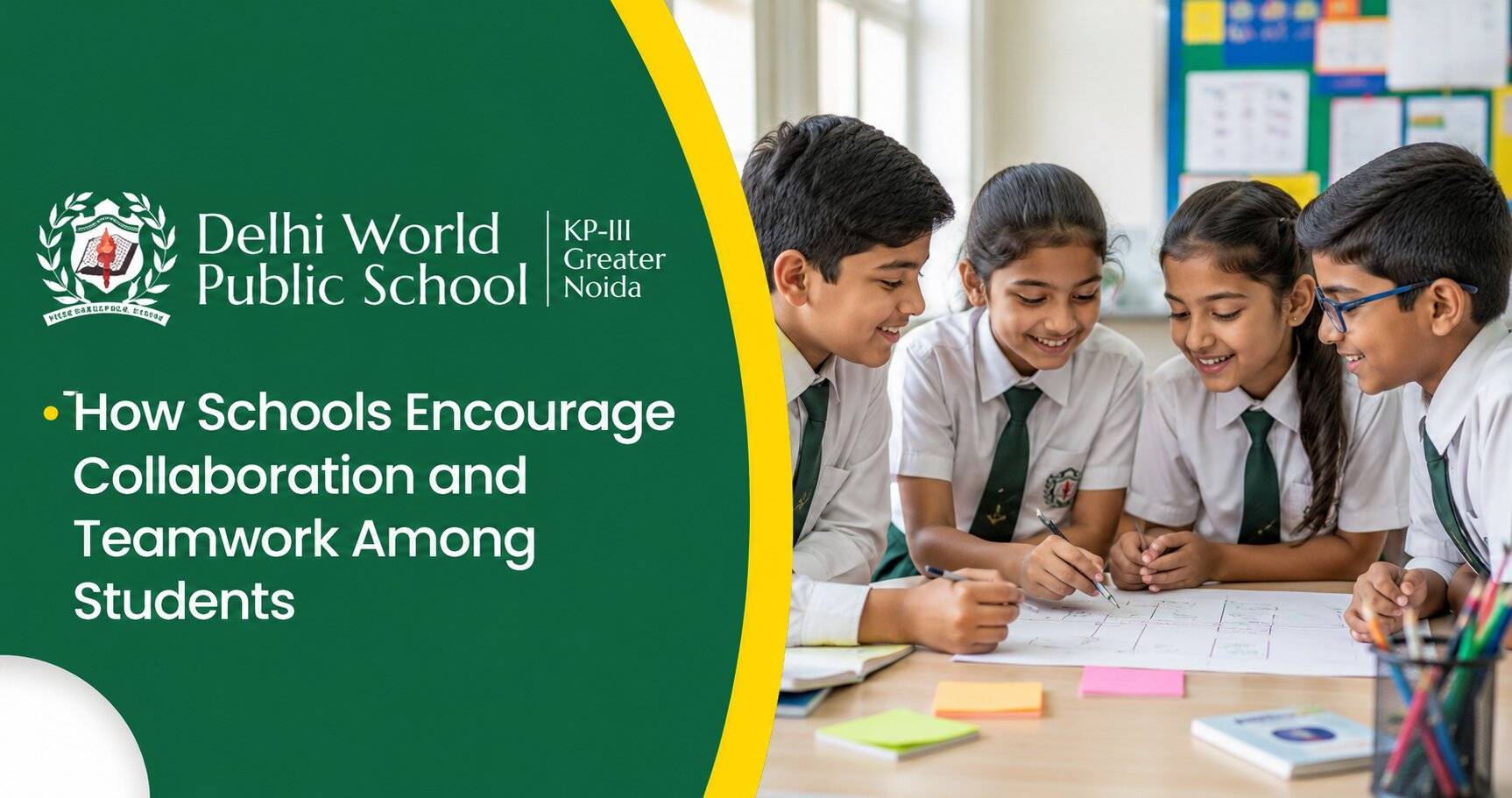
Collaboration helps students develop communication and leadership skills.
Team-based learning improves problem-solving and creativity.
Group activities encourage confidence and peer learning.
A supportive school environment prepares students for real-world teamwork.
Balanced education focuses on both individual and collective growth.
Introduction
About Us
Why Is Collaboration Important for Student Development?
How Do Schools Create Opportunities for Team-Based Learning?
What Role Do Teachers Play in Building a Collaborative Culture?
How Does Teamwork Prepare Students for Future Success?
Conclusion
FAQs
Education is no longer limited to individual achievements and academic scores. At DWPS, the Good Schools in Greater Noida where in today’s competitive world, students need skills that help them communicate effectively, work with others, and solve problems collectively. Collaboration and teamwork have become essential abilities that influence personal growth, academic success, and future career opportunities.
DWPS believes that education should prepare students for real-life situations by developing both intellectual abilities and essential life skills. The institution promotes an engaging learning environment where students are encouraged to participate, collaborate, and explore their potential.
Through innovative teaching methods, activity-based learning, and opportunities for student interaction, the school helps learners develop confidence, creativity, communication skills, and leadership qualities. The focus remains on creating responsible individuals who can contribute positively to society.
Collaboration allows students to learn from each other while developing important social and communication skills. When children work together, they understand different viewpoints, share responsibilities, and learn the value of teamwork.
Group-based learning experiences help students become more confident and adaptable. They learn that success is not only about individual performance but also about supporting others and achieving collective goals.
|
Collaboration Skill |
Benefit for Students |
|
Communication |
Improves expression and listening abilities |
|
Teamwork |
Builds cooperation and responsibility |
|
Problem-solving |
Encourages creative solutions |
|
Leadership |
Develops decision-making skills |
Collaboration helps students:
Develop respect for different opinions.
Improve communication and interpersonal skills.
Learn accountability through shared tasks.
Build confidence while interacting with peers.
Understand the importance of teamwork.
At DWPS, students are encouraged to participate in activities that promote cooperation and strengthen their ability to work effectively with others.
Schools create collaborative learning experiences through various academic and extracurricular activities. These opportunities allow students to engage with their classmates, exchange ideas, and work towards shared objectives.
Some effective approaches include:
Group Projects: Students work together on assignments that encourage research, planning, and presentation skills.
Classroom Discussions: Interactive discussions allow learners to share opinions and learn from different perspectives.
Sports Activities: Team sports teach discipline, coordination, and mutual support.
Creative Activities: Performing arts, competitions, and workshops encourage collective participation.
Such experiences make learning more engaging while helping students understand the importance of cooperation.
DWPS integrates collaborative activities into the learning process to ensure students gain practical skills alongside academic knowledge. These experiences help learners become more confident and comfortable working with others.
Teachers act as facilitators who guide students towards effective teamwork. Their encouragement and teaching strategies influence how children interact, communicate, and contribute within groups.
A teacher-focused collaborative approach includes:
Creating inclusive classrooms where every student feels valued.
Encouraging students to share ideas and opinions.
Assigning group responsibilities to develop accountability.
Guiding students to resolve disagreements positively.
Recognising individual contributions within teams.
Teachers help students understand that every team member plays an important role. This approach develops mutual respect and creates a positive learning atmosphere.
At DWPS, educators focus on creating meaningful classroom experiences where students learn cooperation, leadership, and responsibility through practical participation.
Teamwork is one of the most important skills required in higher education and professional environments. Students who learn collaboration early become better prepared to handle challenges and work effectively with diverse groups.
|
Future Requirement |
Teamwork Contribution |
|
Workplace success |
Improves collaboration abilities |
|
Leadership roles |
Builds confidence and responsibility |
|
Innovation |
Encourages idea sharing |
|
Problem-solving |
Develops collective thinking |
Team-based learning prepares students by helping them:
Adapt to different working styles.
Communicate ideas effectively.
Take initiative and responsibility.
Build stronger relationships.
Approach challenges with confidence.
By developing collaboration skills during school years, students gain a strong foundation for future academic and professional achievements.
Collaboration and teamwork are essential components of modern education. Schools that encourage students to work together help them develop communication skills, confidence, leadership qualities, and social awareness.
DWPS focuses on providing opportunities where students can learn through interaction, cooperation, and shared experiences. By combining academic learning with teamwork-based activities, the institution supports the development of well-rounded individuals who are prepared to succeed in a constantly evolving world.
Why are teamwork skills important for students?
They help children develop communication, cooperation, and problem-solving abilities.
How do group activities improve learning experiences?
They encourage students to share ideas and learn from different perspectives.
What role do teachers play in building teamwork skills?
Teachers guide students to collaborate effectively and respect each other’s opinions.
How does collaborative learning benefit children?
It improves confidence, leadership skills, and social interaction.
Why should schools focus on teamwork beyond academics?
These skills prepare students for future education and professional environments.
How does DWPS promote collaboration among learners?
The school encourages projects, activities, and experiences that build teamwork.


