


Delhi World Public School, Greater Noida
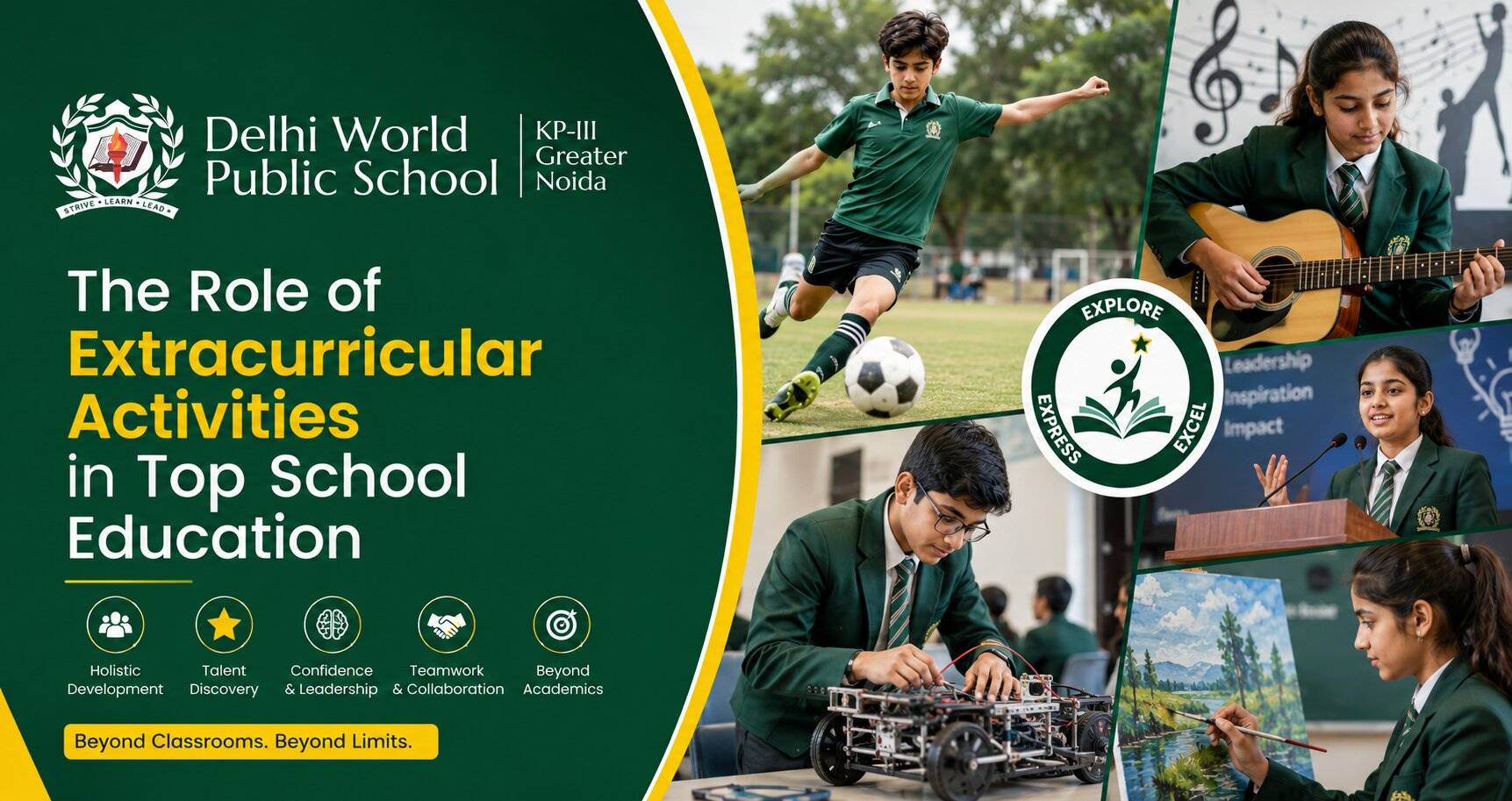
Extracurricular activities support holistic student development.
Participation improves leadership, teamwork, and communication skills.
Sports, arts, and clubs enhance confidence and creativity.
Students develop life skills that complement academic excellence.
Balanced education prepares learners for future careers and personal success.
Modern schools integrate extracurricular opportunities into everyday learning.
Introduction
About Us
Why Are Extracurricular Activities Important in Modern Education?
How Do Activities Beyond Academics Develop Essential Life Skills?
Can Sports and Arts Improve Academic Performance?
How Do Extracurricular Programs Prepare Students for Future Careers?
Extracurricular Impact on Student Development
Conclusion
FAQs
Education today extends far beyond textbooks, examinations, and classroom lectures. At DWPS, the Top School in Greater Noida where parents and educators increasingly recognize that true learning involves nurturing a child's intellectual, emotional, social, and physical growth. This shift has made extracurricular activities a fundamental component of quality education.
Delhi World Public School is committed to nurturing academic excellence alongside holistic development. The institution provides a vibrant learning environment where students participate in sports tournaments, cultural celebrations, leadership programs, innovation projects, and community engagement initiatives. Through a balanced approach to education, learners are encouraged to explore their talents, build confidence, and develop essential life skills.
Academic achievement remains important, but education must also prepare students for real-life situations. Extracurricular activities create opportunities for learners to apply classroom knowledge in practical settings while developing interpersonal skills.
Students who actively participate in various activities often demonstrate:
Better communication abilities
Improved confidence and self-esteem
Stronger social connections
Enhanced problem-solving skills
Greater resilience and adaptability
These experiences help learners understand teamwork, leadership, and responsibility, all of which are essential for success in higher education and professional environments.
|
Area of Development |
Key Benefits |
|
Social Development |
Teamwork, collaboration, empathy |
|
Emotional Growth |
Confidence, resilience, self-awareness |
|
Physical Wellness |
Fitness, discipline, healthy habits |
|
Cognitive Skills |
Creativity, critical thinking |
|
Leadership |
Decision-making, responsibility |
Can students truly develop life skills through extracurricular participation? The answer is yes.
Activities such as debates, student councils, theatre productions, and community outreach programs expose learners to real-world situations that require communication, planning, and decision-making. These experiences help students become more independent and self-motivated.
Leadership and responsibility
Public speaking and presentation skills
Time management
Goal setting
Emotional intelligence
Conflict resolution
Adaptability
By engaging in diverse activities, students learn how to manage challenges, work collaboratively, and build meaningful relationships with peers and mentors.
Many parents wonder whether extracurricular participation distracts students from academics. Research and educational experience suggest the opposite when activities are balanced effectively.
Sports encourage discipline, focus, perseverance, and strategic thinking. Students learn the importance of commitment, practice, and teamwork while maintaining physical health.
Similarly, arts programs including music, dance, painting, and drama stimulate creativity and cognitive development. These activities improve concentration, memory retention, and emotional expression.
|
Activity Type |
Academic Advantages |
|
Sports |
Focus, discipline, time management |
|
Music |
Memory enhancement, concentration |
|
Theatre |
Communication, confidence |
|
Debate |
Critical thinking, research skills |
|
Art & Design |
Creativity, innovation |
Students who participate in structured extracurricular activities often demonstrate improved classroom engagement and overall academic performance.
The modern workplace values more than technical knowledge. Employers increasingly seek candidates who possess leadership qualities, adaptability, collaboration skills, and creative thinking abilities.
Extracurricular activities help students develop these competencies early in life.
Leadership opportunities through student councils
Teamwork experiences in sports and projects
Communication development through debates and presentations
Creativity through arts and innovation clubs
Networking and social skills through events and competitions
Participation in diverse activities also helps students discover personal interests and potential career paths. Exposure to various experiences allows learners to make informed decisions regarding future educational and professional goals.
|
Development Dimension |
Outcome |
|
Academic Growth |
Better engagement and performance |
|
Physical Development |
Improved fitness and wellness |
|
Emotional Development |
Confidence and resilience |
|
Social Development |
Teamwork and empathy |
|
Leadership Development |
Responsibility and decision-making |
|
Career Readiness |
Communication and adaptability |
Confidence building through public participation
Leadership development through organizing events
Creativity enhancement through artistic expression
Team spirit through collaborative projects
Stress management through recreational activities
Community awareness through social initiatives
A balanced educational environment ensures students receive opportunities to excel both inside and outside the classroom.
Extracurricular activities play a vital role in shaping well-rounded, confident, and capable individuals. They complement academic learning by providing practical experiences that nurture leadership, creativity, communication, and resilience. In today's competitive world, these skills are just as important as academic achievements. Schools that prioritize holistic development understand that education is about preparing students for life, not just examinations.
1. Why is Delhi World Public School considered a School for extracurricular development?
Delhi World Public School offers a balanced educational approach that combines academics with sports, arts, leadership opportunities, and personality development programs, helping students grow holistically.
2. How does Delhi World Public School compare with other schools in extracurricular opportunities?
Compared to many institutions, Delhi World Public School provides a wider range of activities that encourage leadership, creativity, teamwork, and student engagement beyond academics.
3. Does Delhi World Public School place more emphasis on extracurricular activities than traditional schools?
The school maintains a healthy balance between academics and extracurricular participation, ensuring students develop both intellectual and life skills.
4. How do sports programs at Delhi World Public School compare with those at other schools?
The sports initiatives focus on discipline, teamwork, fitness, and competitive excellence, helping students build valuable skills that extend beyond the playing field.
5. What leadership opportunities does Delhi World Public School provide compared to other institutions?
Students can participate in councils, clubs, event management, competitions, and collaborative projects that foster leadership and decision-making abilities.
6. Why do parents choose Delhi World Public School over other schools for holistic education?
Parents appreciate the school's emphasis on academic excellence, character development, extracurricular engagement, and future-ready skill building, creating a comprehensive learning experience for students.


